
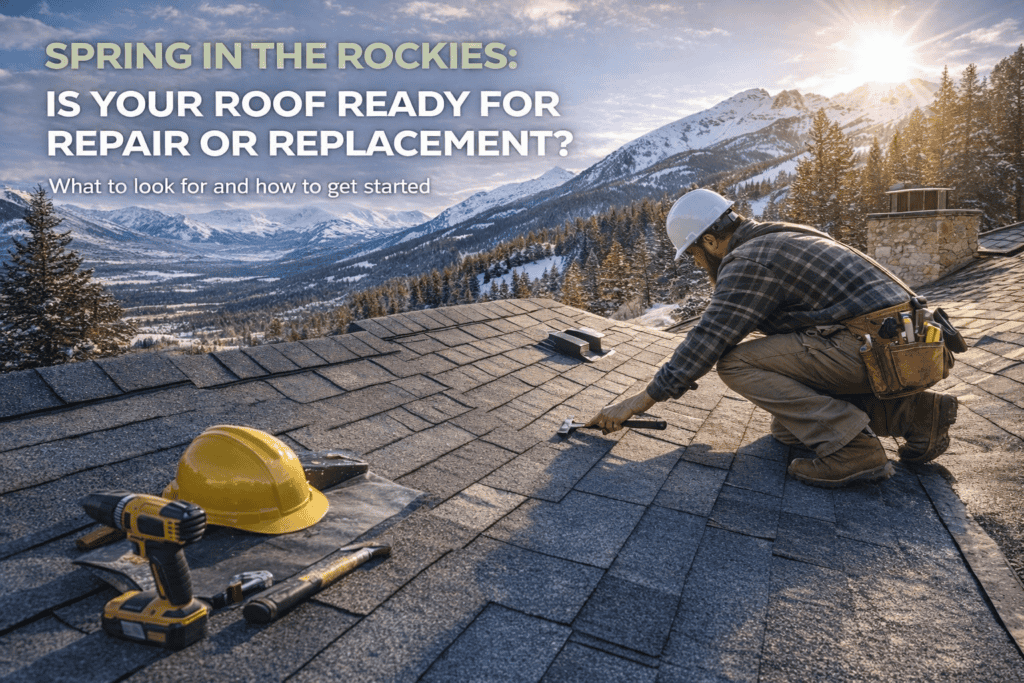
Winter doesn’t go easy on roofs in the high country. Months of heavy snow, ice dams, high winds, and constant freeze–thaw cycles put more stress on your roof than most homeowners realize. By the time spring arrives and the melt begins, small problems that were hidden all winter start to show themselves.
Spring is the most important season to assess your roof’s condition and decide whether you’re looking at maintenance, repairs, or a full replacement. Getting ahead of issues now can save you from leaks, interior damage, and emergency repairs when summer storms roll in.
What Winter Really Does to a Mountain Roof
High-elevation roofs don’t just deal with cold — they deal with weight, movement, and pressure. Over the winter, your roof may have experienced:
- Snow loads stressing decking and framing
- Ice dams forcing water under shingles
- High winds lifting or loosening materials
- Rapid temperature swings causing materials to expand and contract
- Flashing shifting around chimneys, vents, and valleys
Even if nothing looks wrong from the ground, spring moisture is often what exposes hidden damage.
Signs It’s Time for a Professional Roof Inspection
Some issues are obvious. Others aren’t. You should schedule an inspection if you notice:
- Missing, cracked, or curling shingles
- Granules collecting in gutters or at downspouts
- Water stains on ceilings or walls
- Soft spots, sagging areas, or uneven roof lines
- Loose or damaged flashing around penetrations
- Drips or moisture in the attic during snowmelt or rain
In mountain environments, small failures rarely stay small for long.
Repair vs. Replacement: Making the Right Call
Not every roof needs to be replaced — but not every roof should be patched either.
A repair may make sense if:
- Damage is limited to a small, isolated area
- The roof is still relatively young
- The underlying structure is solid
- The issue is clearly caused by a specific event (wind, impact, flashing failure)
A replacement should be considered if:
- The roof is near or past its expected lifespan
- You’ve had repeated leaks or ongoing issues
- Shingles are failing across large sections
- The roof shows widespread wear from weather exposure
- Storm or winter damage compromised the system, not just the surface
In the high Rockies, your roof isn’t just a cosmetic feature. It’s a critical protective system. Sometimes the right decision is to stop chasing repairs and invest in a long-term solution built for mountain conditions.
Why Spring Is the Smartest Time to Act
Spring gives you a narrow window: winter damage is visible, but peak storm season hasn’t fully arrived yet. That means:
- Problems are easier to diagnose
- Repairs can be made before water intrusion spreads
- Replacement projects can be planned before summer demand spikes
- You reduce the risk of emergency leaks during heavy rain or hail season
Waiting often turns manageable projects into urgent, expensive ones.
How to Prepare If You’re Considering Roof Work
If roof service or replacement is on your radar this year, here’s your smart next step:
- Schedule a professional inspection after snow melt
- Address any active leaks or weak points immediately
- Review whether repairs or replacement make more long-term sense
- Plan early before contractor schedules fill up
- If storm damage is involved, document everything for insurance
A proactive approach in spring puts you in control of the timeline, the budget, and the outcome.
Built for the Mountains, Not Just the Forecast
Roofs in the high country require more than standard materials and standard installation. Snow loads, wind exposure, ice, and extreme temperature swings demand systems designed and installed for alpine conditions.
Whether your roof needs targeted repairs or a full replacement, spring is the season to make sure it’s ready for everything the mountains will throw at it next.