
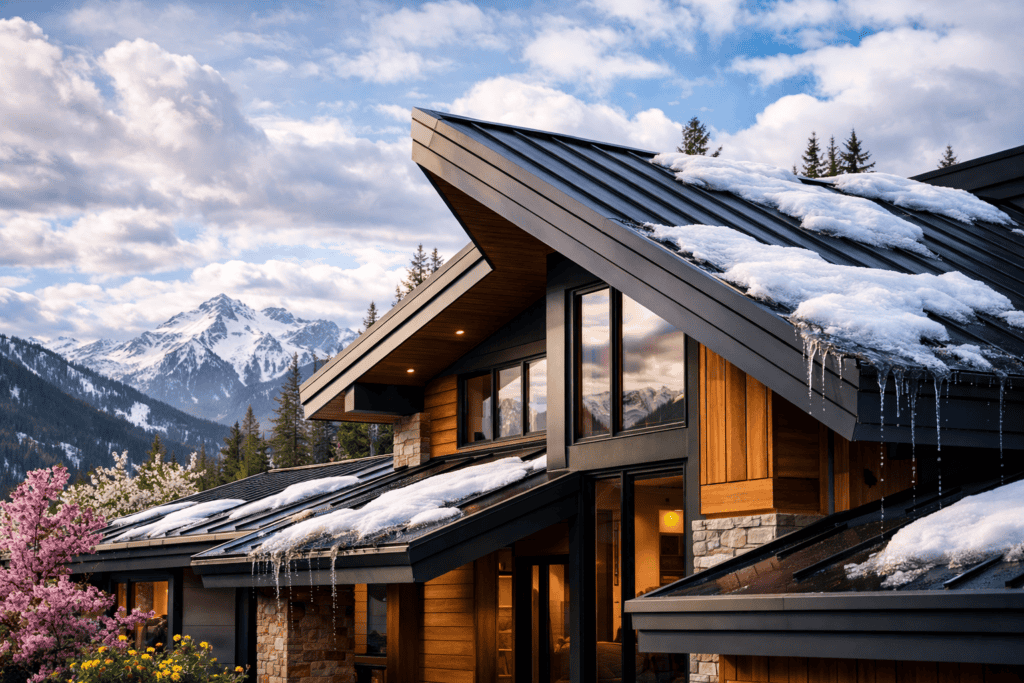
Spring in the Colorado mountains does not mean winter is over. In places like Breckenridge, Steamboat, and Vail, it often means something worse for your roof. Warm days, freezing nights, and sudden snowstorms all hitting within the same week.
This freeze thaw cycle is one of the most damaging conditions your roof will face all year.
When snow melts during the day and refreezes overnight, it creates ice buildup along roof edges and in valleys. These ice dams block proper drainage and force water back under your shingles. That is when leaks start, often without you noticing until interior damage shows up.
Add in a late spring storm dumping heavy, wet snow on an already stressed roof, and the risk increases fast.
What makes spring storms more dangerous
Spring snow is not the same as mid winter powder. It is heavier, wetter, and puts more load on your roof structure.
At the same time:
- Your roof has already taken a full season of wear
- Flashing and seals may be compromised
- Gutters are often partially blocked from winter debris
That combination creates the perfect setup for leaks, sagging, and hidden damage.
Common problems we see every spring
Homeowners across the mountain regions deal with the same issues this time of year:
- Ice dams forming after warm afternoons
- Water backing up under shingles
- Roof leaks showing up during or after storms
- Heavy snow stressing older roofing systems
- Gutters failing or pulling away from the roofline
Most of these problems start small and get worse quickly if ignored.
What you should be doing right now
Spring is the most important time to check your roof, not fall.
Focus on three things:
- Look for signs of water intrusion
Check ceilings and attic spaces for stains or moisture after storms. - Clear drainage paths
Make sure gutters and downspouts are open and moving water away from the home. - Get a professional inspection
A trained eye can catch early signs of damage before they turn into expensive repairs.
Why timing matters
Waiting until summer often means you are dealing with damage that has already spread. Spring inspections allow you to fix small issues before peak storm season and before roofing schedules fill up.
In mountain environments, timing is everything.